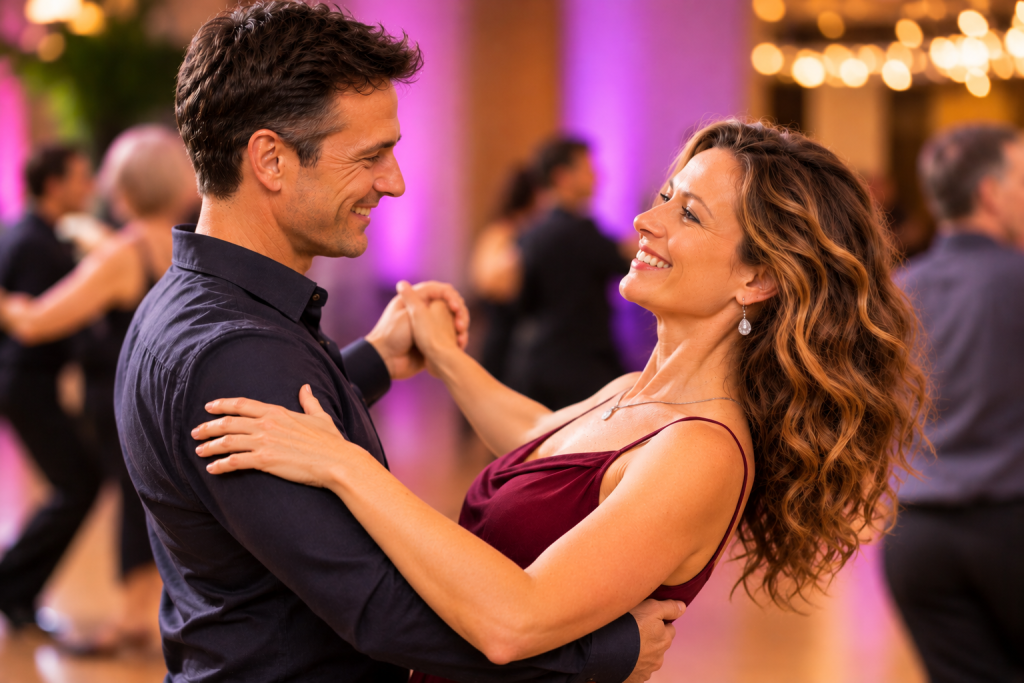
Recently, I wrote about the guilt that surfaced when I allowed myself to be me. When I enjoyed myself, felt happy, had fun and danced.
And then guilt crept in. Because I felt I had been “too much”. Even though I hadn’t done anything wrong.
It made me wonder how many other moments in life can bring up a similar feeling. How often do I ignore my own needs, cross my own boundaries or give up something I want because of guilt?
I want to learn to recognise those moments. To understand what triggers them in me and, above all, to stop letting guilt make my decisions for me, time and again.
And this isn’t only my story. I believe many of us know this feeling.
Guilt Has Many Faces
Guilt can find its way into the smallest, most ordinary moments — so quietly that we hardly notice we might have a choice.
- When we say NO. Even though we’re tired, don’t have time or simply don’t want to do something, we feel guilty because we’ve disappointed someone.
- When we take time for ourselves. Instead of enjoying a walk, a book, dancing or doing nothing at all, we think about everything we ought to be doing instead.
- When we put ourselves first. As though caring for our own needs were selfish and we should always take care of everyone else before ourselves.
- When we can’t help someone. Even though we’re tired ourselves or need support, we feel as if we’ve let someone down.
- When we enjoy ourselves while others are struggling. As though we have to diminish our own happiness to prove that we care.
- When we allow ourselves to do nothing and rest. The moment we stop, our conscience starts nagging because we’re not doing anything useful.
- When we express our wishes. Especially when they differ from other people’s expectations and we fear being rejected or misunderstood.
- When we don’t take responsibility for other people’s feelings. When someone is unhappy with our decision and we feel we have to make their unhappiness go away.
- When we allow ourselves to enjoy our bodies, our sensuality or attention. When, after a lovely experience, we begin to wonder whether we were even allowed to enjoy ourselves that much.
- When we fall ill or simply can’t carry on. Instead of allowing ourselves to rest and recover, we feel guilty because we cannot fulfil our responsibilities.
Does any of this feel familiar to you? Maybe more than one of these moments?
When We Try to Prove Our Worth Through Work
Many of us grew up hearing that we had to be good, kind, accommodating and always ready to help. First we had to finish all our tasks, take care of others, put up with things and only then make time for ourselves.
But when does that “then” ever come?
When everything is done? We know that never happens.
We work, care for others, solve problems and take on new responsibilities. Even when we’re already tired, we tell ourselves we can manage just a little more.
And somewhere deep inside, perhaps we’re waiting for someone to notice our efforts. To say, “Thank you. I see how much you do. I appreciate you.”
But even when that praise comes, the feeling of being enough often doesn’t last very long.
Many of us go to work and run errands even when we’re already feeling unwell. We’ll push through a little longer, finish this one thing, do that other thing, and then we’ll rest. I know a friend who felt guilty when she became truly ill and had to stay at home. Not only because she couldn’t go to work, but because she had fallen ill at all. Her body needed rest and recovery, yet she worried about everything she couldn’t get done because she was unwell.
And I find myself wondering:
When did we start believing that our worth depends on how much we do?
We don’t need to exhaust ourselves to prove that we’re worthy. And we don’t have to become ill before allowing ourselves to rest.
When We Rest, but Don’t Feel Rested
Sometimes we finally sit or lie down, but a voice in our heads immediately says, “Come on, get up. You still have this to do. And that is waiting. And don’t forget the other thing.”
Our bodies are still, but our minds keep presenting us with a long list of things to do.
Instead of peace, we feel restless. As though we’re wasting precious time whenever we’re doing nothing.
And so, even when our bodies are resting, we aren’t truly resting inside.
Then the holiday comes. A week or two that should also be a time for rest. But so often we turn even our holidays into another list of tasks.
In the morning we have to go running, then swimming, see as many sights as possible, climb the nearest hill, visit as many places as we can and make the most of every last minute of every day. Not to mention that we don’t completely put work aside either, because we still allow ourselves to read an email, reply to it or take an important business call.
We come home exhausted, feeling as though we need a holiday to recover from our holiday.
Of course, there’s nothing wrong with an active holiday if that’s what we want and enjoy.
But I wonder whether we know how to allow ourselves even one day with no plans. A day when we don’t have to go anywhere and don’t have to achieve anything at all.
Have we forgotten what it’s like to simply be?
When We Learn to Say NO
The word NO. So short, yet sometimes so difficult to say.
“I can’t, because …”
And straight away we rush to explain, apologise and search for a good enough reason. As though our wish, or the simple fact that we don’t want something, isn’t reason enough in itself.
When we begin to set boundaries, we don’t just experience discomfort within ourselves. We often meet resistance from those around us, too.
People who are used to us always being available may not like our new boundaries. They may feel disappointed, reproach us for them or try to persuade us to change our minds.
And that’s when guilt quickly makes itself heard. We may even begin to doubt our decision and give in again, simply to avoid those uncomfortable feelings.
Do we really owe everyone an explanation and a defence of every decision we make?
Sometimes it’s enough simply to say NO.
Where Does My Responsibility End — and Someone Else’s Begin?
I think it’s important to distinguish between hurting someone and someone feeling hurt.
If we humiliate someone, insult them, deliberately mislead them or treat them disrespectfully, we are responsible for our behaviour.
But if we kindly and respectfully say how we feel, what we want or what we don’t want, and the other person is disappointed, that doesn’t necessarily mean we’ve done anything wrong.
How often do we stay silent, hide our wishes, suppress our feelings or cross our own boundaries because we’re afraid of hurting someone?
Where, then, is the line between being kind to someone else and being untrue to ourselves?
Do I Even Allow Myself to Matter, Too?
Guilt isn’t always a reliable sign that we’ve done something wrong.
Sometimes it arises simply because we’ve behaved differently from what we’re used to.
Because we listened to ourselves. Because instead of automatically saying “yes”, we said “no”. Because we allowed ourselves to rest, even though the work wasn’t finished.
Of course, that doesn’t mean we can ignore other people’s needs or that we don’t have to take responsibility for our actions.
It does mean that our needs matter, too.
You know the instruction we hear on an aeroplane: if oxygen masks are needed, put yours on first and only then help a child.
Why? Because if you don’t have enough oxygen yourself, you cannot help someone else effectively either.
So why do we so often forget this in everyday life? How can we care for others if we are completely exhausted ourselves?
Caring for ourselves isn’t the opposite of caring for others. It’s part of the foundation that makes it possible.
Perhaps guilt won’t disappear overnight. Perhaps it will still come up when we set a boundary, take time for ourselves or allow ourselves something that makes us happy.
But in that moment, we can pause and ask ourselves:
Have I really done something wrong? Or do I simply feel uncomfortable because, this time, I took myself into account too?
I don’t have to choose between loving others and loving myself.
I can be loving, compassionate and ready to help, while still mattering to myself, too.
Sometimes someone will be disappointed with us. But if we spend our lives trying to prevent that, we may end up letting ourselves down, again and again.
If some of these words feel familiar and you’d like to slow down, listen to yourself and explore your needs and boundaries with more kindness, I’d love to welcome you to a one-to-one Soul Spa session.
This is a space just for you. A space where you don’t have to prove anything, please anyone or meet anyone’s expectations.
Where you can simply be who you are.
And allow yourself to matter, too.